
What Does Niacinamide Do? A 30-Second Guide
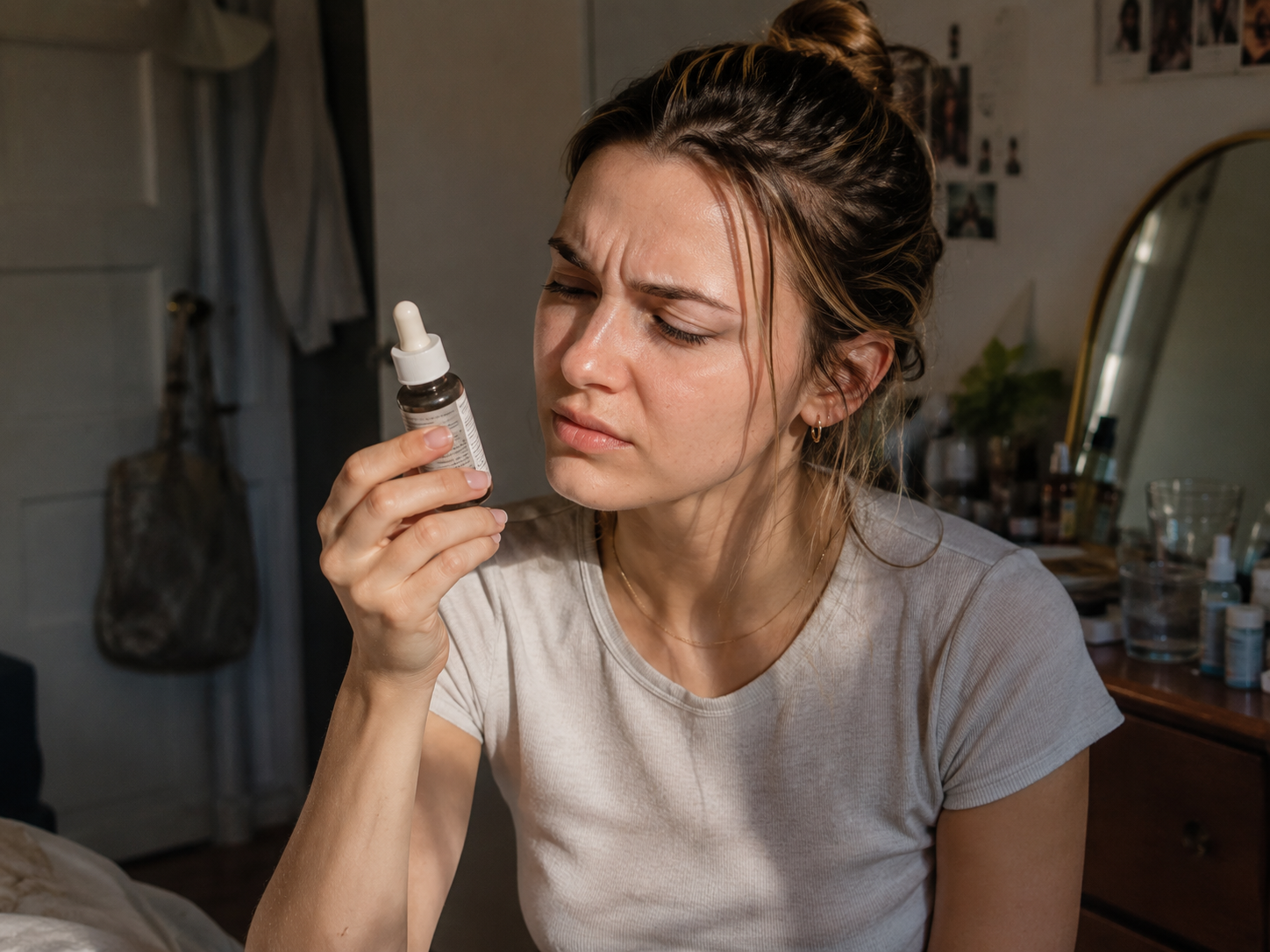
Niacinamide is quietly in half the products on your shelf — serums, moisturisers, even sunscreens. So what is it actually doing in there?
TL;DR — Niacinamide (vitamin B3) is a gentle all-rounder: it strengthens the skin barrier, calms redness, controls oil, and softens dark spots. It plays nicely with almost everything.
What niacinamide is
Niacinamide is a form of vitamin B3. On an ingredient list it usually appears simply as "niacinamide," typically at 2–10%. It's water-soluble, well-tolerated, and one of the few actives that suits almost every skin type.
What it actually does
- Strengthens the skin barrier — boosts ceramide production, so skin holds onto moisture and gets less reactive.
- Calms redness and irritation — its anti-inflammatory effect helps sensitive and acne-prone skin.
- Regulates oil — can reduce excess sebum, making it popular for oily and combination skin.
- Fades dark spots — helps interrupt pigment transfer, gradually evening out tone.
- Smooths texture — over time, skin looks more refined and less shiny.
What it pairs with
This is niacinamide's superpower: it's a team player. It layers comfortably with hyaluronic acid, peptides, retinoids, and exfoliating acids, and it can actually buffer the irritation from stronger actives. Unlike retinol and acids, which you should keep on separate nights, niacinamide rarely causes conflicts.
The old "niacinamide and vitamin C cancel out" claim is largely a myth for modern formulas — most people can use both without issue.
How to use it
- When: morning, night, or both.
- Where in your routine: after cleansing, before heavier creams (serum step).
- Strength: 5% suits most people; very high percentages can occasionally cause flushing.
Niacinamide for acne and oily skin
Niacinamide is a quiet hero for oily and acne-prone skin. It helps regulate sebum (so skin looks less shiny by mid-afternoon), calms the inflammation behind red, angry breakouts, and supports the barrier that harsh acne treatments often strip. It won't replace a dedicated acne active, but it pairs well with most of them — and rarely causes the irritation that benzoyl peroxide or strong acids can.
Niacinamide vs vitamin C vs retinol
They're not rivals — they do different jobs, and many routines use all three:
- Niacinamide — the gentle all-rounder: barrier, redness, oil, mild brightening.
- Vitamin C — a morning antioxidant for brightness and sun-damage defence.
- Retinol — the heavy hitter for lines, texture, and acne, used at night. (See how to layer retinol safely.)
A common, well-tolerated setup: vitamin C + niacinamide in the morning, retinol + niacinamide at night.
What percentage of niacinamide is best, and how long until it works?
For everyday use, 5% niacinamide hits the sweet spot of effective and gentle; very high percentages don't add much and can occasionally cause flushing. Be patient — barrier and oil improvements often show within 2–4 weeks, while tone and fine-line changes build over 8–12 weeks of consistent use.
Key takeaways
- Niacinamide is vitamin B3 — a gentle, do-it-all active.
- It strengthens the barrier, calms redness, controls oil, and fades dark spots.
- It pairs with almost everything, including retinoids and acids.
- Use it AM, PM, or both, around 5%.
Can't pronounce half your ingredients?
Niacinamide is the easy one. Most labels are a wall of phenoxyethanols and ascorbyl glucosides. That's the whole point of Scangloo: scan a product and get every cryptic ingredient translated into plain human — no chemistry degree required.
References & further reading
- Boo YC. Mechanistic Basis and Clinical Evidence for the Applications of Nicotinamide (Niacinamide) to Control Skin Aging and Pigmentation. Antioxidants. 2021.
- Bissett DL, et al. Topical niacinamide reduces yellowing, wrinkling, red blotchiness, and hyperpigmented spots in aging facial skin. Int J Cosmet Sci. 2004.
FAQ
Can I use niacinamide every day?
Yes. It's gentle enough for daily use, morning and night, for most skin types.
Does niacinamide cancel out vitamin C?
For modern formulations, no — that's an outdated myth. Most people can use both, whether layered or at different times of day.
Is niacinamide good for acne-prone skin?
Often, yes. Its oil-regulating and anti-inflammatory properties make it a popular choice for blemish-prone and sensitive skin.
Every ingredient, in plain English
Scangloo scans your products and decodes the labels — so you actually know what's on your face. Join the waitlist for early access.
Join the waitlist