
Retinol and Acids: Can You Use Them Together?
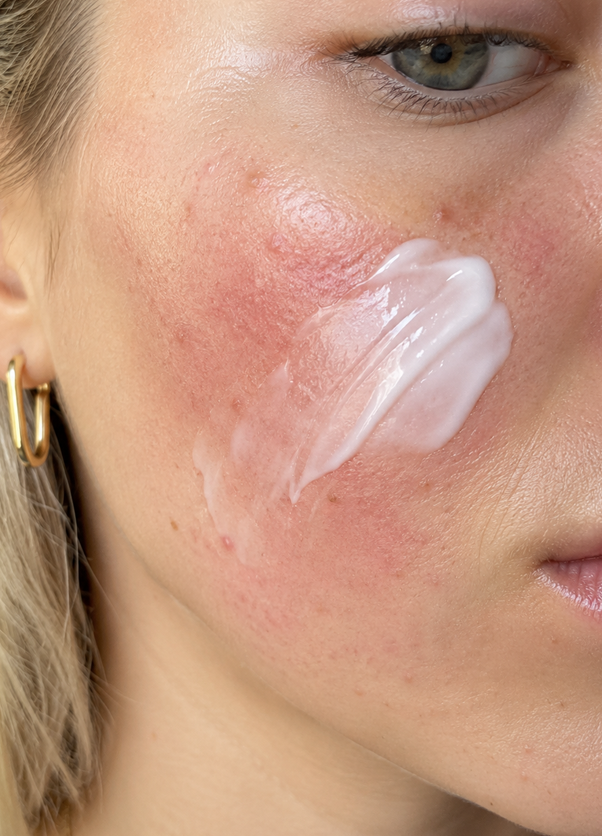
You bought the retinol. You bought the glycolic acid. You used them on the same night feeling like a skincare scientist — and woke up flaky, red, and regretful. Here's what went wrong.
TL;DR — Don't layer strong acids and retinoids in the same routine. Alternate them on different nights. Your barrier will thank you.
Why retinol and acids clash
Both are powerful, and both work by speeding up cell turnover:
- Retinoids (retinol, retinal, tretinoin) accelerate skin renewal and boost collagen.
- Exfoliating acids — AHAs like glycolic and lactic acid, BHAs like salicylic acid — dissolve the bonds between dead surface cells.
Used together in one sitting, they over-exfoliate. The result is a damaged skin barrier: stinging, peeling, redness, and breakouts. Ironically, the things you were trying to fix often get worse.
More actives at once doesn't mean faster results — it usually means a trip back to square one while your skin recovers.
The right way to use both
You can absolutely have both in your routine. The trick is timing, not cramming.
1. Alternate nights
Retinoid on Monday/Wednesday/Friday, acid on Tuesday/Thursday — for example. This is the simplest, safest approach for most people.
2. AM acid, PM retinoid (advanced)
Some tolerate a gentle acid in the morning and a retinoid at night. Only try this once your skin is already comfortable with each one separately — and always with SPF, since acids increase sun sensitivity (and retinoids do too).
3. Start low and slow
Introduce one active at a time, 1–2 nights a week, and build up over weeks. If you add both at once and react, you'll have no idea which one to blame.
What pairs well — and what doesn't
- ✅ Retinoid + moisturiser + SPF — the classic, barrier-friendly combo.
- ✅ Acid + hydrating, barrier-supporting ingredients (hyaluronic acid, ceramides, niacinamide).
- ⚠️ Retinoid + strong acid, same night — skip it unless a professional has told you otherwise.
- ⚠️ Multiple exfoliants stacked — pick one; more isn't better.
What you can and can't mix: quick pairing guide
A cheat sheet for layering skincare actives without the guesswork:
- Retinol + niacinamide — ✅ great together; niacinamide can ease retinoid irritation.
- Retinol + hyaluronic acid / ceramides — ✅ ideal; hydration buffers the actives.
- Retinol + vitamin C — ⚠️ both can irritate; most people split them (vitamin C in the AM, retinol in the PM).
- Retinol + AHA/BHA — ⚠️ alternate nights, don't layer.
- AHA + BHA — ⚠️ pick one per session; stacking exfoliants is the fast lane to over-exfoliation.
- Acids + benzoyl peroxide — ⚠️ separate them; together they're harsh and can deactivate each other.
Retinol "purging" vs irritation: how to tell the difference
When you start a retinoid, you might break out at first — this is purging, as faster cell turnover pushes congestion to the surface, and it typically settles within 4–6 weeks in your usual breakout zones. Irritation is different: stinging, burning, tight or flaky skin, and breakouts in places you don't normally get them. Purging passes; irritation is a sign to scale back frequency or strength.
A beginner-friendly sample week
If you own both a retinoid and an acid, here's a gentle starting schedule (all PM, moisturiser every night, SPF every morning):
- Mon — retinoid
- Tue — exfoliating acid
- Wed — just moisturiser (recovery)
- Thu — retinoid
- Fri — moisturiser only
- Sat — acid
- Sun — moisturiser only
Build up frequency slowly as your skin gets comfortable. If anything stings or flakes, do less, not more.
Key takeaways
- Retinoids and acids both exfoliate — together they can damage your barrier.
- Alternate them on different nights instead of layering.
- Introduce one active at a time and build up slowly.
- Always wear SPF — both increase sun sensitivity.
Not sure what's already clashing on your shelf?
This is exactly the kind of thing that's easy to get wrong when you own a dozen products. Scangloo reads your labels and flags the combinations that fight on your face — so you don't have to memorise the chemistry. Until then, our guide to building a routine from what you own walks through sequencing step by step.
References & further reading
- U.S. Food & Drug Administration. Alpha Hydroxy Acids — increased UV sensitivity and sunburn-alert labelling.
- Updated review of topical tretinoin in dermatology. From Acne and Photoaging to Skin Cancer. J Clin Med. 2025.
- Boo YC. Nicotinamide (Niacinamide) for skin aging and pigmentation — barrier-supporting pairings. Antioxidants. 2021.
FAQ
Can I use retinol and salicylic acid together?
Best to alternate nights. Salicylic acid (a BHA) is great for congestion, but stacking it with a retinoid in one routine risks irritation. Use them on separate evenings.
What can I safely use with retinol?
Hydrating and barrier-supporting ingredients: hyaluronic acid, ceramides, niacinamide, and a good moisturiser. Pair them in the same routine without worry.
How do I know if I've over-exfoliated?
Tight, stinging, shiny or flaky skin, new sensitivity, and breakouts are classic signs. Pause all actives, focus on gentle moisturising, and reintroduce slowly.
Stop guessing what clashes
Scangloo scans your shelf and flags ingredient conflicts before your skin finds out the hard way. Join the waitlist for early access.
Join the waitlist