
"Holy Grail" Serums: How to Tell If One Actually Works
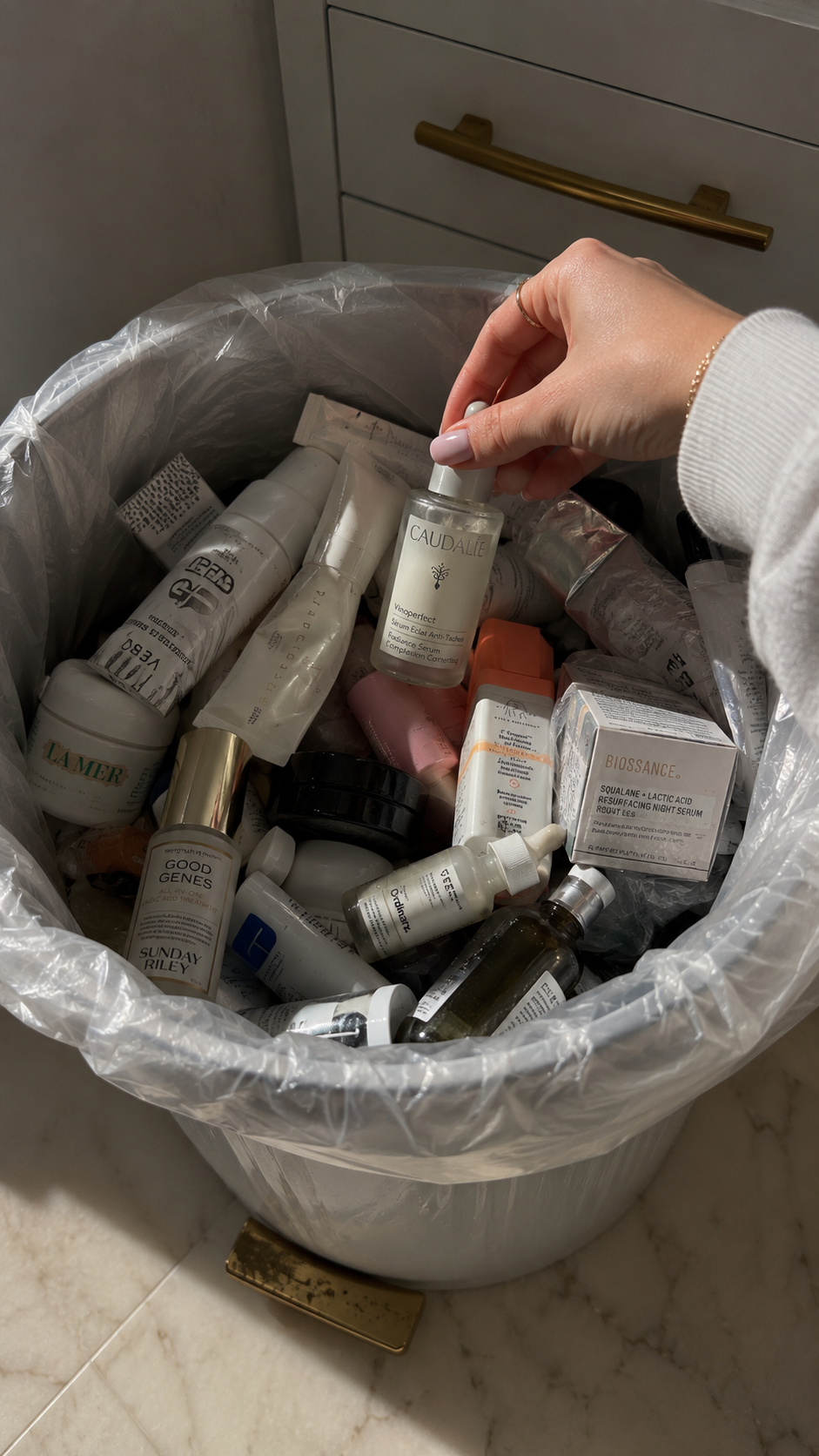
Every month there's a new "holy grail" serum, a sold-out waitlist, and a glowing before-and-after. Before you buy your sixth one, here's how to tell whether a product is doing anything at all.
TL;DR — Judge a serum by its active ingredients and concentration, give it 6–12 weeks, change one thing at a time, and ignore the marketing adjectives.
Marketing words mean nothing
"Glow-boosting." "Radiance-renewing." "Clinically inspired." None of these are regulated or defined. A product can say almost anything on the front of the bottle. What matters is on the back: the ingredient list.
The front of the package is for selling. The back is where the truth lives.
Read the ingredients, not the claims
Look for an evidence-backed active at a meaningful concentration, reasonably high on the list:
- Retinoids — fine lines, texture, acne
- Vitamin C (e.g. ascorbic acid) — brightness, antioxidant protection
- Niacinamide — barrier, redness, oil (see what niacinamide does)
- Exfoliating acids — texture, tone
- Peptides, hyaluronic acid, ceramides — hydration and support
If the "hero" active is buried at the very bottom of the list, below the fragrance, there's probably barely any of it in there.
Give it real time
Skin renews on a roughly month-long cycle. Most actives need 6–12 weeks of consistent use to show results. A serum that "transforms your skin overnight" is selling temporary plumping or light-reflecting particles — not real change.
Test like a scientist, not a shopper
- Change one product at a time. If you swap three things at once, you'll never know which one helped.
- Take a baseline photo in consistent lighting, then compare monthly. Day-to-day, you can't see slow progress.
- Watch for irritation, not just results — a product that stings or breaks you out isn't "purging," it's not working for you.
The "holy grail" trap
Most shelves don't have a product problem — they have a consistency problem. Constantly chasing the next viral serum resets the clock every few weeks, so nothing ever gets the 6–12 weeks it needs. Often the best move is to stop buying and start sticking with what you have. (See how to build a routine from what you own.)
How to read a skincare ingredient list (INCI 101)
The ingredient list (INCI) is ordered by concentration down to about 1% — so what's near the top makes up most of the product. A few quick rules for reading one like a pro:
- Top of the list is mostly water, base, and humectants like glycerin — normal and fine.
- The "hero" active should appear reasonably high, not dead last. If retinol or vitamin C sits below the fragrance, there's barely any in there.
- Anything below fragrance/parfum is present in tiny amounts — often "fairy dusting" so it can be named on the front.
- Don't fear long names. "Sodium hyaluronate" and "tocopherol" sound scary but are just hyaluronic acid and vitamin E.
Signs your skincare IS working
- Gradual, steady improvement over weeks — not overnight.
- Skin feels comfortable, balanced, and less reactive.
- Your specific concern (texture, tone, breakouts) is slowly trending better in monthly photos.
Signs it's NOT working — or hurting
- Persistent stinging, burning, tightness, or flaking.
- New breakouts outside your usual zones, or worsening redness.
- No change at all after 12 consistent weeks with a proven active.
Patch test new products first: apply a small amount to your inner forearm or behind the ear for a few days before putting it on your face. It won't predict everything, but it catches the worst reactions early.
Key takeaways
- Front-of-bottle claims are marketing; the ingredient list is the truth.
- Look for a proven active, reasonably high on the list.
- Give any serum 6–12 weeks of consistent use.
- Change one product at a time and track with photos.
Decode any label in seconds
Reading ingredient lists is the honest way to judge a product — and also the tedious way. Scangloo scans the label for you, decodes each ingredient in plain English, and tells you whether a product is actually pulling its weight before you spend on number six.
References & further reading
- Updated review of topical tretinoin in dermatology. From Acne and Photoaging to Skin Cancer — evidence and realistic timelines for a proven active. J Clin Med. 2025.
- Boo YC. Clinical evidence for niacinamide in skin aging and pigmentation. Antioxidants. 2021.
FAQ
How long before a serum shows results?
Typically 6–12 weeks of consistent use, since skin renews on a roughly monthly cycle. Hydration can look better sooner, but real change takes time.
Does a higher price mean a serum works better?
No. Price reflects branding, packaging, and marketing as much as formulation. A well-formulated affordable product can outperform a luxury one.
Is "purging" real?
Purging can happen with actives that speed up cell turnover (like retinoids), but persistent stinging, burning, or new breakouts from other products usually mean it's not right for your skin.
Know before you buy
Scangloo decodes any product's ingredients and flags whether it's worth a spot in your routine. Join the waitlist for early access.
Join the waitlist